From Idea to MVP: How to Build a Web or Mobile App That’s Ready to Ship (The 7 Step Process)

Intro: How to Build a Web or Mobile App
A minimum viable product (MVP) is the simplest version of your app that delivers real value to real users and lets you learn whether your idea works, built deliberately small so you can ship fast, gather feedback, and improve, rather than spending a year building something nobody asked for. The point of an MVP isn’t to launch something cheap and unfinished; it’s to launch something focused, so you learn the truth about your idea while you still have the time and money to act on it.
This pillar guide explains what an MVP really is, the most common ways founders get it wrong, and a practical process for going from idea to a first version that’s genuinely ready to ship.
What an MVP is, and isn’t
The “minimum” in MVP causes endless confusion. It does not mean broken, ugly, or barely working. It means the smallest set of features that delivers genuine value and tests your core assumption. The “viable” part is just as important as the “minimum”; an MVP still has to actually work and be worth using.
A good way to think about it: an MVP solves one real problem well, rather than ten problems poorly. It’s complete in its small scope, not incomplete in a large one.
What an MVP is not:
- It’s not a prototype: a prototype demonstrates an idea; an MVP is a real product real users use.
- It’s not your full vision: that comes later, informed by what the MVP teaches you.
- It’s not an excuse for poor quality: “it’s just an MVP” shouldn’t mean it’s broken or confusing.
Why building an MVP first matters
The biggest risk in building any product is spending enormous time and money building something the market doesn’t actually want. An MVP is the antidote. By shipping a focused first version quickly, you:
- Learn from real users, not assumptions. What people say they want and what they actually use often differ; the MVP reveals the truth.
- Reduce wasted investment. You find out whether the idea works before you’ve spent everything building the full vision.
- Reach the market faster. Launching sooner means learning sooner and, if it works, generating value sooner.
- Build the right thing. Each round of feedback steers the product toward what users genuinely need, so you build the right full product rather than guessing.
For startups especially, this connects directly to being fundraising-ready: a working MVP with real users and learning is far more compelling to investors than a polished idea with no evidence.
The idea-to-MVP process
1. Define the core problem
Start with the single problem you’re solving and for whom. Be specific. An MVP that tries to serve everyone serves no one. The clearer the problem, the easier every later decision becomes.
2. Identify the one essential feature set
List everything the full product could do, then ruthlessly cut to the few features that deliver the core value. Ask of each: “Can we test our core idea without this?” If yes, it’s not in the MVP. This prioritisation is the hardest and most important part; most MVPs fail by being too big, not too small.
3. Design the experience
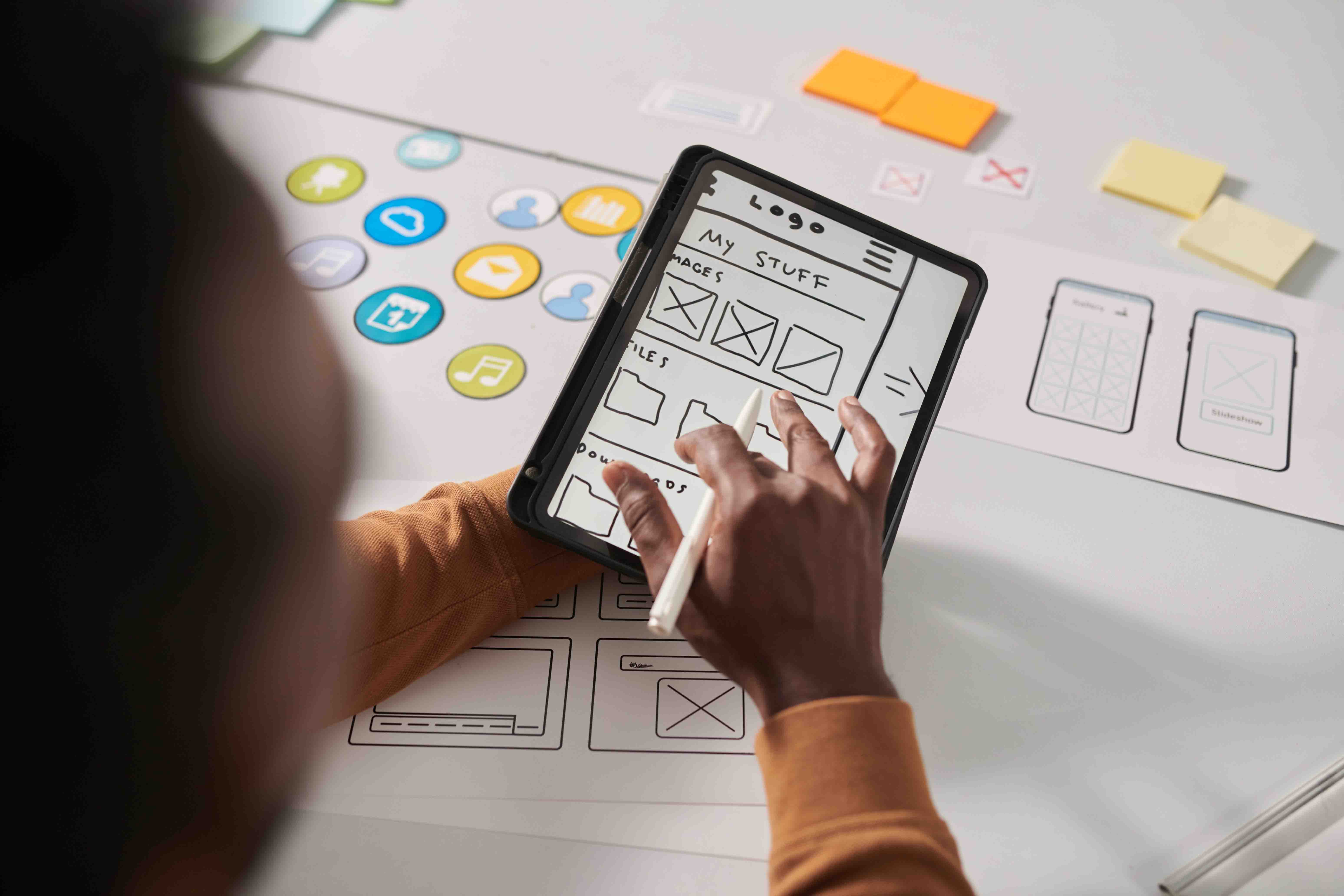
Even a minimal product needs good UI/UX design. Users judge your app by how it feels to use, and a confusing MVP gets abandoned regardless of the idea’s merit. Design the core flows to be genuinely usable, minimal scope, but not minimal quality.
4. Choose the right build approach
Decide how to build it, which connects to the native vs. cross-platform vs. PWA decision. For an MVP, the right approach is usually the one that gets a quality product to your users fastest without painting you into a corner later.
5. Build it well, but lean
Build the chosen scope properly. “Lean” refers to scope, not quality; the code should be sound enough to build on, because if the idea works, you’ll be extending this foundation. Cutting corners on the build creates technical debt and avoidable long-term cost, which slows you down exactly when you want to move fast.
6. Ship and measure
Launch to real users and measure what matters: are people using it, completing the core action, coming back? Set up the means to learn before you launch, so you capture the lessons from day one.
7. Learn and iterate
Use what you learn to decide what to build, fix, or cut next. This loop- ship, learn, improve is the entire point of the MVP. The first version is the start of the conversation with the market, not the end of the project.
Common MVP mistakes
- Building too much. The most common failure. Founders can’t bear to cut features, ship late and bloated, and lose the speed that made the MVP worthwhile.
- Building too little. The opposite error is so minimal it delivers no real value, so users can’t meaningfully respond to it.
- Confusing minimal with low-quality. A broken, confusing MVP fails to test the idea, because users abandon it for reasons unrelated to the concept.
- Not measuring. Launching with no way to learn wastes the entire purpose of an MVP.
- Ignoring the feedback. An MVP you don’t iterate on is just a small product, not a learning tool.
Frequently asked questions
What is an MVP (minimum viable product)?
An MVP is the simplest version of a product that delivers real value to users and tests whether your core idea works. It’s built small and focused so you can ship quickly, learn from real usage, and improve, rather than spending a long time building a full product on unverified assumptions.
How do I build an MVP for my app idea?
Define the core problem and audience, cut to the few essential features that deliver the core value, design the experience to be genuinely usable, choose a build approach that ships quality fast, build that scope well, launch to real users with measurement in place, and iterate based on what you learn.
Does “minimum viable product” mean low quality?
No. “Minimum” refers to scope, the smallest set of features that delivers value, not quality. An MVP still has to work well and be worth using. A broken or confusing MVP fails to test your idea, because users abandon it for reasons unrelated to the concept.
How long should it take to build an MVP?
It varies with the idea’s complexity, but the goal is to ship a focused first version relatively quickly rather than spending a long time perfecting a large feature set. Keeping scope tight is what makes fast shipping possible, and fast shipping is the point of an MVP.
The fastest way to learn whether your idea works is to ship a focused first version well. Explore our app development service to take your idea from concept to a shippable MVP.